
CONNECT
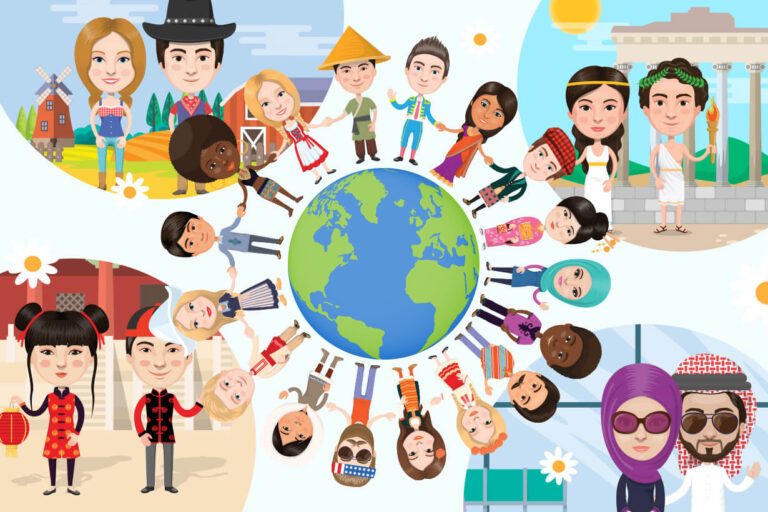
 Cultural diversity is the combination of different customs, knowledge, expressions, and forms of organization present among human groups. It represents the variety that exists in societies and demonstrates how each people has developed its own characteristics over time.
In current times, this diversity is highly relevant because it fosters respectful coexistence among people and broadens knowledge about different realities. Valuing differences contributes to forming more conscious, supportive citizens who are better prepared to live in community.
We can identify this cultural richness in many aspects of daily life, such as dance styles, works of art, sports, traditional games, accents, food choices, and popular festivities. It also appears in family customs, stories shared by elders, and cultural influences present in films, books, and television programs. These differences make society more dynamic, creative, and full of learning opportunities.
CONTEMPLATE
• How can traditional games represent the culture of a people?
• How do family customs help preserve the history of a community?
• Why should the differences between peoples be valued?
ACTIVITY PROPOSAL
WINDMILL
It uses the force of the wind to move and has large propellers or blades that rotate when the wind blows. This movement is transferred to an internal system that performs some type of work.
In the past, windmills were used to grind grain, pump water, or even produce mechanical energy. Today, more modern windmills, called wind turbines, transform wind into electrical energy.
The function of the motor in some modern windmills is to assist in controlling the operation, such as rotating the propellers in the direction of the wind or keeping the system running when the wind is weak. It complements the natural force to ensure that the windmill continues to operate efficiently.
BUILD
As a team, build a prototype of a Windmill. Use the parts available in the structural robotics technology kit. Carefully follow each step of the assembly and testing. All members must actively participate in the process and contribute ideas and solutions.
Link galeria Gisele
CONTINUE
After building the prototype, share your experience with your classmates.
- Did you encounter any difficulties building the windmill?
- Did the blades move correctly?
- Was the motor placed in the correct position?
Then, store all the materials used.